The notification pings on your phone. You see the sender: “Editorial Office.” Your heart races—this is the manuscript you poured months of blood, sweat, and data into. You open the email, skipping past the formalities until your eyes land on the dreaded words: “Major Revision Required.”
Suddenly, the screen is filled with a wall of text from Reviewer 2, calling your methodology “fundamentally flawed” and your writing “poorly structured.” For many researchers, this is the moment their legs start to shake and the urge to delete the file forever becomes overwhelming. But what if that harsh feedback wasn’t an attack, but a refining fire designed to turn your “raw gold” into a “precious jewel”?
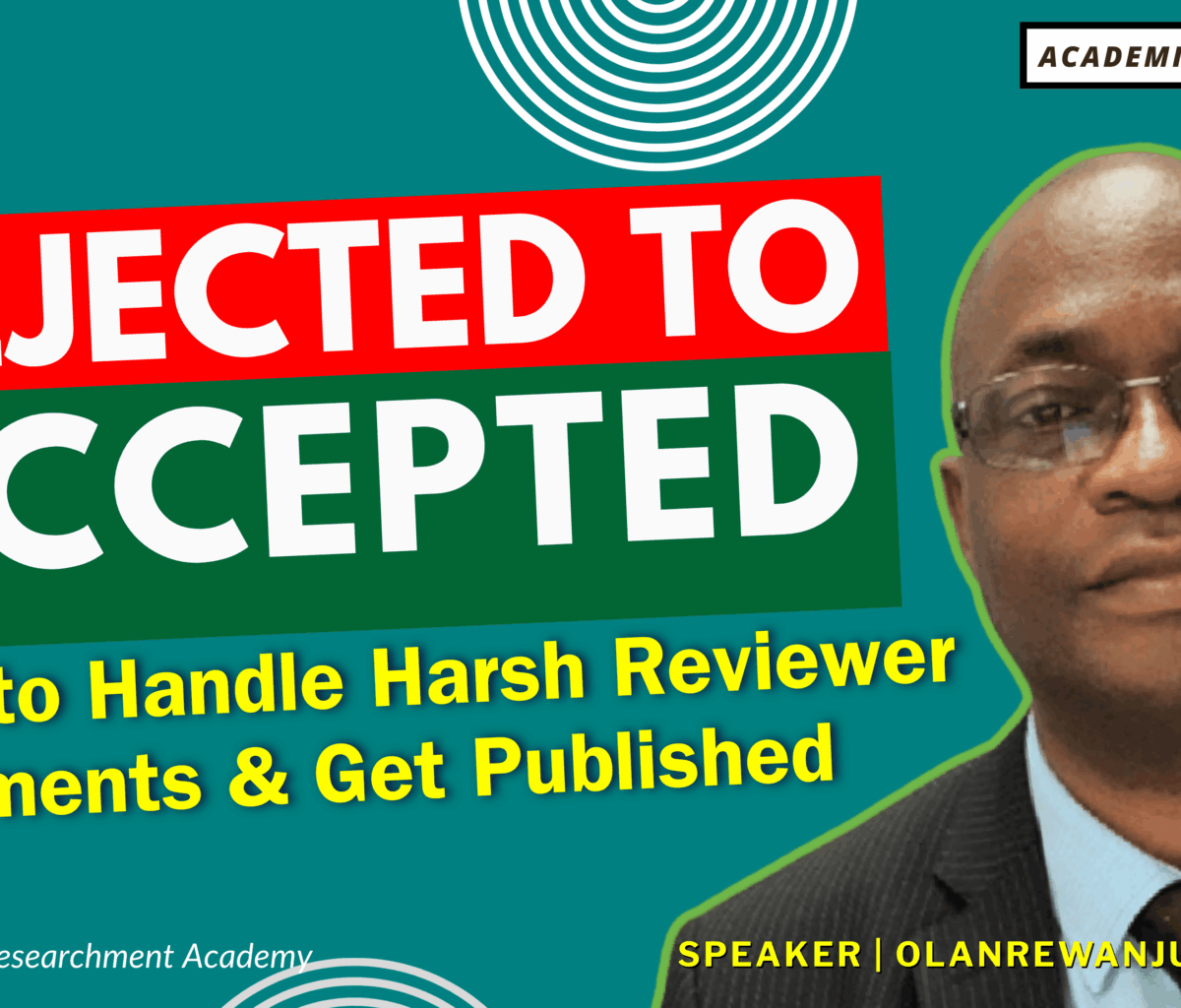
As Dr. Fatoba explained in a recent Researchment Academy webinar, the peer review process isn’t a barrier to your career; it is the ultimate quality control mechanism that transforms a simple paper into a credible, high-impact publication. This guide will walk you through the exact strategic steps to handle even the harshest criticism and come out on top with a published paper you can be proud of.
The “Refining Fire”: Why Peer Review Matters
Before we look into the “how,” we must understand the “why.” In the academic mantra of “Publish or Perish,” it is easy to focus on quantity over quality. However, a long list of 100 poor-quality publications is less valuable than 10 high-impact, well-vetted papers.

Peer review exists to:
-
Ensure Research Quality: To prevent “junk” from entering the scientific record.
-
Enhance Credibility: When readers see a paper in a reputable journal, they trust it because they know it survived the scrutiny of experts.
-
Facilitate Progress: Clear, vetted data allows the next researcher to build on your work rather than wasting time on flawed results.
How to Turn Reviewer Criticism Into Your Best Publication
Step 1: Manage Your Internal “Emotional Turbulence”
The biggest mistake researchers make is reacting too quickly. When you read a harsh comment, your brain goes into “fight or flight” mode. You feel like the reviewer hates you or doesn’t understand your brilliance.
-
Take Time to Process: Do not reply immediately. Close the email and walk away for 24 to 48 hours. Let the initial sting fade before you try to analyze the feedback objectively.
-
Detach Your Persona: Remember, the reviewer is critiquing the manuscript, not you. Even senior professors receive “hash” comments; it is a universal part of the academic journey.
-
Practice Self-Compassion: Remind yourself that you are in a process of growth. A critique of your methodology is an opportunity to learn a better way, which eventually makes you an authority in your field.
Step 2: Categorize and Prioritize (The Strategic Plan)
Once you are calm, print out the comments and start sorting them. Not all criticisms are created equal. Dr. Fatoba suggests breaking them into three distinct buckets:
-
Major Revisions: These concern the “soul” of your paper—methodology, data analysis, and core arguments. These require the most time and effort.
-
Minor Revisions: These are small clarifications, missing citations, or minor adjustments to figures.
-
Editorial/Formatting: These are the “rules of the house”—font size, reference style, and word counts.
The Strategy: Tackle the Major Revisions first. If you can’t fix a fundamental flaw in the methodology, the minor tweaks won’t matter. Once the “heavy lifting” is done, the rest of the process will feel like a downhill sprint.
READ ALSO: 3 Ways to Write Impactful Research Introductions | Capture and Maintain Reader Attention
Step 3: Formulating a “Bulletproof” Response Letter
Your response letter is just as important as the manuscript itself. This is where you convince the editor and reviewers that you have taken their concerns seriously.
-
Be Polite and Respectful: Reviewers are usually unpaid volunteers. Even if they were rude, you must remain the professional “bigger person.” Thank them for their time and insights.
-
Use a Point-by-Point Structure: Copy every single reviewer comment into a new document. Place your response directly underneath each one. Do not leave a single comment unaddressed.
-
Be Specific with Evidence: Don’t just say “we fixed it.” Say: “In response to Reviewer 2’s comment on the methodology, we have re-analyzed the data. See Figure 3 on Page 9 for the updated results”.
-
Handle Misunderstandings Gracefully: If a reviewer clearly missed a point, it’s usually because your presentation wasn’t clear enough. Instead of saying “You are wrong,” say: “We apologize for the lack of clarity. We have now clarified this point in Section 2.1 to ensure the reader understands the objective” .
Step 4: The Golden Rule—No Bad Results, Only Bad Presentation
A common theme in the webinar was the idea that “there is no bad result, only bad presentation”. You might have a groundbreaking discovery in your lab, but if your writing is incoherent or your graphs are messy, the reviewer will get discouraged.
To avoid immediate rejection in the future:
-
Work on your writing skills: Use your university’s writing center or professional editing services.
-
Focus on Logic: Your paper should tell a story. Each paragraph should lead logically to the next.
-
Follow the Guidelines: Ignoring the “Author Guidelines” is a fast track to a “Desk Reject.” Check the formatting, reference style, and scope before you hit submit.
Step 5: Address Common “Reviewer Nightmares”
-
“What if I can’t implement a change?” Don’t ignore it. Be transparent and honest. Explain the technical or logistical limitations and provide a reasonable justification for why the original approach was maintained.
-
“Are papers from Africa unfairly rejected?” Dr. Fatoba argues it is rarely about geography and usually about newness and presentation. If your research isn’t contributing something “new” to the global stage, it may be rejected for “local consumption” only. The key is to highlight the global relevance of your work.
-
“What if the reviewer isn’t an expert?” Sometimes editors send papers to the wrong people. If a reviewer asks for something nonsensical, politely clarify your expertise and the scope of the study. You can even write a private note to the editor for clarification.
REA ALSO: 3 Research Crimes That will get your Paper Retracted
Conclusion
Ultimately, the goal of publishing shouldn’t just be to get promoted or add a line to your CV. It is about contributing meaningfully to human knowledge. When you embrace criticism with a growth mindset, you aren’t just fixing a paper; you are becoming a better scientist.

Next time you get that “Major Revision” email, take a deep breath. You aren’t being attacked—you are being invited into the “refining fire.”
Stay Connected & Informed: Want to be the first to know about our upcoming research events and exclusive webinar updates? Follow Researchment on Facebook, LinkedIn and Instagram.
Unlock Future Opportunities: Ready to elevate your research journey with more insightful sessions like this one? Visit academy.researchment.com to register for upcoming webinars. Our Researchment Academy series is packed with knowledge to empower you!
Ready to Elevate Your Research? Publish with Glintplus!
Stop waiting and start making an impact. Submit your manuscript to one of our esteemed journals at glintplus.com/journals and become part of a thriving community of researchers who trust Glintplus for:
- Unwavering Quality: Rigorous peer review and high editorial standards.
- Maximum Visibility: Broad indexing and effective dissemination of your work.
- Academic Integrity: Ethical publishing practices you can rely on.
Take the Next Step in Your Publication Journey:
 Ready to Submit? Visit glintplus.com/journals to explore our journals and streamline your submission process.
Need a Manuscript Makeover? Our expert editorial support and comprehensive author resources are here to help you shine. Contact us today via publish@glintplus.com!
Never Miss an Opportunity! Stay ahead of the curve by following Glintplus on Facebook, LinkedIn and Instagram for the latest updates and publishing tips.
Let’s collaborate to amplify your groundbreaking research and ensure it reaches the global audience it deserves.