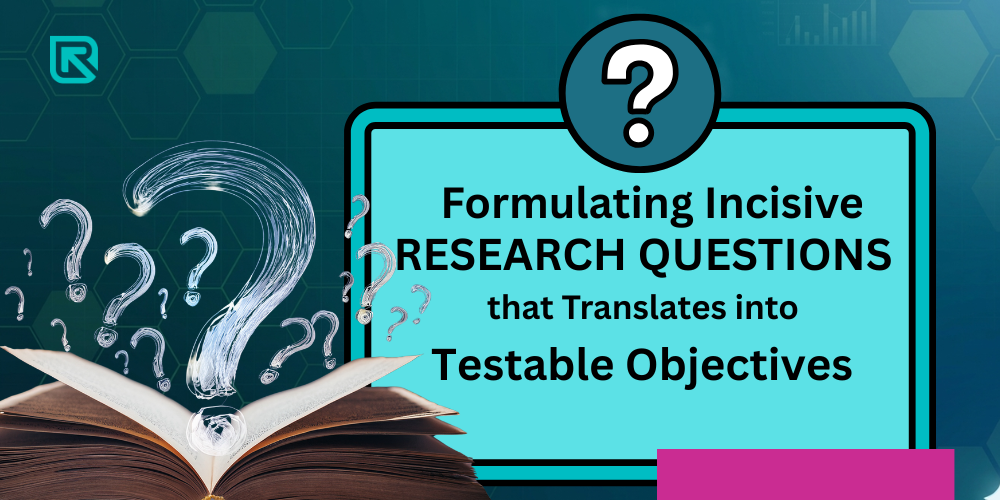
In the world of academia, research is often described as a journey. But even the most energetic traveler will get lost without a clear compass and a well-defined destination. In a powerful Glintplus webinar, Professor Sidiqat Abdulwahab from the University of Ilorin provided a masterclass on the most critical phase of this journey: Formulating incisive research questions that bridge the gap between “knowing there’s a problem” and “knowing how to solve it.”
Whether you are a postgraduate student or a researcher, this guide will help you refine your focus and ensure your research is both impactful and achievable.
Understanding the “Research Gap”: The Water Bottle Metaphor
Before you can ask a question, you must find out what is missing. Professor Sidiqat uses a brilliant and simple metaphor to explain what a research gap actually is:
“Imagine a bottle that is 3/4 full of water. The remaining 1/4 is the empty space—that is the gap.”
In research, the “water” represents the existing body of knowledge. The “empty space” is the part where questions remain unanswered, data is missing, or theories don’t quite fit the reality.
Key Takeaways on Gaps:
-
A Hole is a Hole: It doesn’t matter how small your contribution is. “A hole is a hole, irrespective of its size”. You don’t have to fill the whole bottle; you just need to add your “drop” of new knowledge.
-
Endless Discovery: Because human society and technology change constantly, the bottle will never be truly full. “Knowledge is not ending… as long as we have human beings living, we need to continue to seek that knowledge”.
-
The Problem Statement: Your “Statement of the Problem” is simply the act of pointing at that empty 1/4 of the bottle and explaining why it should be full and why it currently isn’t.
READ ALSO: PhD Thesis Guide | 5 Steps to Find Research Gaps & Write SMART Objectives
What Makes a Research Question “Incisive”?
An “incisive” question is like a surgeon’s scalpel—it cuts through the noise to get to the heart of the matter. Professor Sidiqat explains that for a question to be effective, it must be concise, sharp, and focused.
To check if your research question is sharp enough, put it through the Four-Way Test:
| The Test | What to Ask Yourself |
| 1. Specificity | Is the question clearly defined? Avoid broad terms like “How does the economy work?” and try “How does inflation affect small-scale poultry farmers in Kwara State?” |
| 2. Relevance | Does this solve a real-world problem? “If it doesn’t affect anyone, why spend years on it?”. |
| 3. Testability | Can this be answered with data? If you can’t measure it or observe it, it’s a philosophy question, not a research question. |
| 4. Originality | Are you just repeating what’s in the bottle, or are you adding something new?. |
Practical Strategies to Find Your Research Niche
Many researchers get stuck wondering where to find a gap. The speaker suggests three “active” ways to hunt for them:
-
Look for Conflict: Read two papers on the same topic. If Study A says “Technology improves grades” and Study B says “Technology distracts students,” there is a Conflicting Finding. Your job is to find out why they differ.
-
Probing the Unknown: Look at the “Suggestions for Further Research” section at the end of current papers. Authors often tell you exactly where the gaps are!
-
Changing the Context: Take a well-known theory and apply it to a new location or population. A study on “Remote Work” in the USA will have very different results than a study on “Remote Work” in a rural Nigerian village with limited electricity.
The Bridge: Translating Gaps into Questions
Once you see the gap (the empty part of the bottle), you must turn that observation into a question.
-
Observation: “We know that fertilizer increases crop yield, but we don’t know how it affects soil health over 10 years in this specific region.”
-
Incisive Question: “What is the long-term impact of nitrogen-based fertilizers on soil pH levels in the North-Central region of Nigeria?”
From Questions to Action: Formulating SMART Objectives
A research question asks “What?” while a research objective says “How I will find out.” Professor Sidiqat is firm on this: Your research questions must directly translate into your objectives.
For every question you ask, you should have a corresponding objective. To make these “testable,” use the SMART framework:
-
S – Specific: Use action verbs like “To identify,” “To analyze,” or “To evaluate.”
-
M – Measurable: How will you know you’ve succeeded? (e.g., “To survey 200 farmers”).
-
A – Achievable: Don’t try to save the world in one thesis. Be realistic about your resources.
-
R – Relevant: Does this objective actually answer the research question?
-
T – Time-bound: Can you complete this within the timeframe of your degree or grant?
Example of Alignment:
-
Question: “What are the socio-cultural factors that contribute to conflict between pastoralists and farmers?”
-
Objective: “To identify and analyze the specific socio-cultural factors contributing to the farmer-herdsman conflict in Benue State.”
The “Engine Room”: Why Literature Review is the Key
Many students think they should write their objectives first and read later. Professor Sidiqat warns that this is a mistake:
“The beginning of research is actually literature review… it is from that literature that the gap is going to emanate from.”
You cannot know what is missing from the bottle if you haven’t looked at how much water is already inside. Reading isn’t just a chore; it’s the process of discovering where you can make your mark.
READ ALSO: Turn Reviewer Criticism Into Your Best Publication: A Step-by-Step Guide
Final Pro-Tips for Success
-
Don’t Work in a Vacuum: “Research cannot be conducted in isolation”. Talk to mentors and peers about your questions.
-
Focus on Impact: Always ask, “So what?” If your research is successful, how will it change the lives of people or the understanding of your field?.
-
Keep it Simple: The most profound research often comes from the simplest, most direct questions.
Summary Checklist for Your Research Proposal:
-
Identify the Gap: What is the empty space in the bottle?
-
State the Problem: Why is that empty space causing a problem?
-
Ask the Question: Is it sharp, specific, and testable?
-
Set the Objective: Is it a SMART action that answers the question?
-
Review the Literature: Does your reading prove that this hasn’t been done before?
By following Professor Sidiqat framework, you move from being a “student” to being a “contributor” to global knowledge. You aren’t just filling a requirement; you’re filling the bottle.
Ready to get published? Revisit your current manuscript title today. Does it follow the Law of Context? Is it hitting the KISS sweet spot? A few small tweaks could be the difference between 20 views and 25,000.
Stay Connected & Informed: Want to be the first to know about our upcoming research events and exclusive webinar updates? Follow Researchment on Facebook, LinkedIn and Instagram.
Unlock Future Opportunities: Ready to elevate your research journey with more insightful sessions like this one? Visit academy.researchment.com to register for upcoming webinars. Our Researchment Academy series is packed with knowledge to empower you!
Ready to Elevate Your Research? Publish with Glintplus!
Stop waiting and start making an impact. Submit your manuscript to one of our esteemed journals at glintplus.com/journals and become part of a thriving community of researchers who trust Glintplus for:
- Unwavering Quality: Rigorous peer review and high editorial standards.
- Maximum Visibility: Broad indexing and effective dissemination of your work.
- Academic Integrity: Ethical publishing practices you can rely on.
Take the Next Step in Your Publication Journey:
 Ready to Submit? Visit glintplus.com/journals to explore our journals and streamline your submission process.
Need a Manuscript Makeover? Our expert editorial support and comprehensive author resources are here to help you shine. Contact us today via publish@glintplus.com!
Never Miss an Opportunity! Stay ahead of the curve by following Glintplus on Facebook, LinkedIn and Instagram for the latest updates and publishing tips.
Let’s collaborate to amplify your groundbreaking research and ensure it reaches the global audience it deserves.